As traditional gas boilers face an uncertain future and energy efficiency takes centre stage in British homes, air source heat pumps have emerged as a leading alternative heating solution. But like any technology, these systems come with their own set of strengths and limitations. This comprehensive guide explores the advantages and disadvantages of air source heat pumps, helping you determine whether they represent the right choice for your home.
Introduction: The Heating Revolution at a Crossroads
The great British heating landscape is undergoing a remarkable transformation. With gas prices fluctuating wildly, government net-zero targets looming, and increasing environmental awareness among homeowners, the humble air source heat pump has moved from niche technology to mainstream consideration.
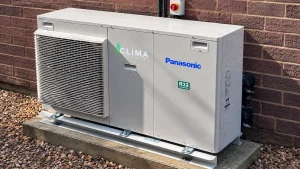
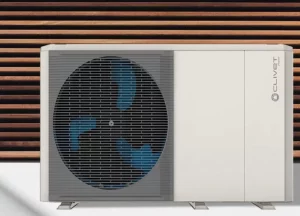
You’ve likely noticed these units appearing on the sides of houses throughout your neighbourhood—their distinctive rectangular form a visible sign of changing times. But behind their simple appearance lies a complex calculation of benefits and drawbacks that varies significantly between properties. Let’s unpack both sides of the equation to help you navigate this important decision.
Advantages: The Case for Air Source Heat Pumps
Impressive Energy Efficiency
Perhaps the most compelling advantage of air source heat pumps is their remarkable efficiency:
Unlike traditional heating systems that create heat by burning fuel or through electrical resistance, heat pumps simply move heat from one place to another. This fundamental difference allows them to achieve efficiency rates that seem almost magical by conventional standards.
A well-installed system typically delivers 3-4 units of heat for every unit of electricity consumed (expressed as a Coefficient of Performance or COP of 3-4). This 300-400% efficiency dwarfs even the most advanced condensing boilers, which max out around 90-95% efficiency.
During mild autumn or spring conditions, when outside temperatures hover between 7-15°C, modern heat pumps can achieve even higher efficiency—some reaching COPs of 5 or beyond. Even in colder weather, today’s advanced models maintain respectable performance, typically maintaining COPs above 2.5 even as temperatures approach freezing.
Substantial Carbon Reduction
For environmentally conscious homeowners, the carbon benefits prove particularly attractive:
An average semi-detached home transitioning from a gas boiler to an air source heat pump typically reduces carbon emissions by approximately 2.5 tonnes annually. This figure rises dramatically to 4-6 tonnes when replacing oil, LPG, or direct electric heating systems.
Perhaps most impressively, this carbon advantage automatically improves over time without any action required from the homeowner. As the UK electricity grid continues incorporating more renewable sources—with remarkable progress already achieved in recent years—heat pumps become progressively greener without requiring any system upgrades.
Impressive Longevity
Air source heat pumps boast impressive durability compared to traditional heating systems:
While conventional gas boilers typically last 10-15 years, properly maintained heat pumps often remain operational for 20-25 years. This extended lifespan stems from their simpler mechanical operation with fewer moving parts and no combustion process.
The external components are specifically designed to withstand British weather conditions year-round, with robust casings and weather-resistant materials that hold up well against our famously variable climate.
Reduced Maintenance Requirements
The maintenance burden for heat pump owners is refreshingly light:
Unlike gas boilers that require annual safety checks by law, heat pumps need only periodic inspections—typically recommended every 2-3 years after the initial settling-in period. These checks primarily involve cleaning filters, checking refrigerant levels, and ensuring optimal pressure settings.
The absence of combustion eliminates many traditional boiler issues: no risk of carbon monoxide, no gas safety concerns, and no combustion chamber to maintain. For many homeowners, this simplified maintenance regime offers welcome peace of mind.
Heating and Cooling Capability
Many systems offer dual functionality that proves increasingly valuable:
While not all models include this feature, many air source heat pumps can reverse their operation to provide cooling during warmer months. As British summers become progressively warmer due to climate change, this additional functionality represents a significant advantage over traditional heating-only systems.
Rather than requiring separate systems for heating and cooling, a single reversible unit can handle both functions efficiently—providing year-round climate control from one installation.
Government Financial Support
Substantial grants significantly improve the financial equation:
The current Boiler Upgrade Scheme offers £7,500 towards air source heat pump installation, dramatically reducing the upfront cost barrier. This support effectively brings installation costs much closer to traditional boiler replacement—particularly when the existing system requires replacement anyway.
Additional incentives may be available through local council schemes, energy company obligations, and occasionally through mortgage lenders offering green home improvement loans at preferential rates.
Disadvantages: The Challenges to Consider
Significant Upfront Investment
Perhaps the most obvious drawback remains the initial cost:
Even with generous government grants, air source heat pumps typically require a greater upfront investment than conventional alternatives. Post-grant costs generally range from £3,000 to £5,500 beyond equivalent gas boiler installation—a premium that requires careful consideration.
This higher initial outlay means the payback period varies considerably depending on your existing heating system, energy usage patterns, and property characteristics. While those replacing expensive heating fuels like oil or LPG often see relatively quick returns, homes transitioning from mains gas may face longer payback periods.
Installation Disruption and Space Requirements
Physical installation presents several practical challenges:
The external unit requires adequate space—typically at least one square metre of ground area with sufficient clearance for proper airflow. This requirement can prove problematic for properties with limited outdoor space, particularly in dense urban areas or homes with small gardens.
Internal components—including the hot water cylinder, buffer tank, and associated pipework—demand additional space inside the property. This sometimes necessitates sacrificing valuable cupboard space or utility room area that wasn’t required with a compact combi boiler setup.
The installation process itself typically takes 2-5 days, involving both external groundwork and internal system modifications. While experienced installers minimise disruption, the process inevitably causes some household disturbance.
Property Suitability Constraints
Not all homes are immediately suitable for heat pump installation:
Properties with poor insulation struggle to maintain comfortable temperatures with heat pumps, which typically operate at lower flow temperatures than traditional boilers. Older homes with solid walls, inadequate loft insulation, or single glazing may require significant improvement works before heat pump installation becomes viable.
Existing radiator systems often need upgrading to larger models or supplementing with underfloor heating, as heat pumps work most efficiently with larger heat-emitting surfaces. This additional work adds cost and disruption to the installation process.
Listed buildings or properties in conservation areas may face planning restrictions affecting external unit placement, sometimes requiring special permissions or adaptations that complicate the installation.
Performance Variations
Real-world performance can vary significantly based on several factors:
Heat pump efficiency decreases as outdoor temperatures fall, meaning the system works harder during the coldest periods. While modern units remain effective even in sub-zero conditions, electricity consumption increases during cold snaps—precisely when heating demand peaks.
System setup and configuration critically affect performance, with flow temperature, radiator sizing, and control strategies all influencing actual efficiency. Poor installation or inappropriate commissioning can significantly undermine system benefits, highlighting the crucial importance of choosing experienced, MCS-certified installers.
User behaviour affects outcomes more dramatically than with traditional systems. Understanding how to operate the system optimally—particularly regarding temperature settings and programming—proves essential for achieving the best results.
Operating Noise Considerations
Noise output requires thoughtful management:
While modern units operate much more quietly than early heat pump models, the external unit does produce some noise—typically between 40-60 decibels at one metre distance (comparable to a modern refrigerator or moderate rainfall). This noise output necessitates careful positioning to minimise impact on both your household and neighbours.
Anti-vibration mounts, acoustic barriers, and strategic placement can all help mitigate noise concerns, but proper planning during the design phase remains essential—particularly for terraced properties or homes with limited external space options.
Different Heating Experience
The heating sensation differs noticeably from traditional systems:
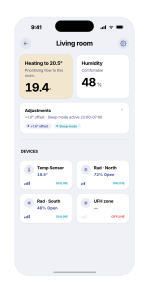
Heat pumps generally provide a more constant background warmth rather than the rapid, intense heat boost associated with gas boilers. This difference requires some adjustment from homeowners accustomed to quick temperature changes at the twist of a thermostat.
The most efficient operation involves maintaining a stable temperature rather than allowing significant fluctuations, which may require rethinking heating patterns and expectations. While many users ultimately prefer this more consistent warmth, the transition period sometimes proves challenging.
Response times typically extend longer than with conventional systems, meaning sudden temperature changes take longer to achieve. Programming therefore becomes more important, requiring more thoughtful scheduling rather than reactive adjustments.
Making an Informed Decision
Given these varied considerations, how might you determine whether an air source heat pump represents the right choice for your specific circumstances?
Ideal Candidates
Your property likely presents a strong match for heat pump technology if:
- It boasts good insulation levels (EPC rating C or above)
- You currently rely on expensive heating fuels like oil, LPG, or direct electricity
- Your home features underfloor heating or space for larger radiators
- You have suitable outdoor space for the external unit
- Environmental benefits rank highly among your priorities
- You’re already planning other significant home improvements
Less Suitable Scenarios
Conversely, you might face greater challenges if:
- Your property has poor insulation with limited scope for improvement
- You have very restricted outdoor space
- Your home is a listed building with strict planning constraints
- You’re not planning to stay in the property long-term
- You’re particularly sensitive to noise
- You have limited budget for complementary upgrades
Hybrid Solutions
For some properties, hybrid approaches offer an attractive middle ground:
Hybrid systems combining a smaller heat pump with a conventional boiler provide flexibility—using the heat pump for baseline heating during milder conditions while automatically switching to the boiler during peak demand or extreme cold. This approach reduces carbon emissions and running costs while mitigating some heat pump limitations.
Such systems typically cost less than full heat pump installations and require fewer property modifications, potentially representing a stepping-stone approach for homes not quite ready for complete transition.
Conclusion: Balancing the Equation
Air source heat pumps, like any significant home technology, present a nuanced picture of advantages and disadvantages. Their remarkable efficiency, environmental benefits, and longevity stand in contrast to higher upfront costs and installation complexities.
What’s clear is that they represent an increasingly viable solution for many British homes—particularly as installation expertise grows, technology advances, and government support remains generous. The calculation becomes especially favourable when replacing expensive heating fuels or coinciding with necessary boiler replacement and other home improvements.
As Britain continues its journey toward net-zero carbon emissions, heat pumps will undoubtedly play an expanding role in our domestic heating landscape. Understanding both their strengths and limitations allows for informed decision-making based on your specific property characteristics, financial circumstances, and environmental priorities.
Whether you’re ready to embrace this technology today or simply exploring future options, taking time to thoroughly assess your property’s suitability and obtain expert advice will ensure that any heating decision serves your household well for decades to come. After all, sensible heating choices represent not just a matter of personal comfort but increasingly a contribution to our collective environmental responsibility—a quintessentially British balance of practical pragmatism and forward-thinking stewardship.