The transition to greener heating technologies has never been more important for British homeowners. As energy prices fluctuate and environmental concerns mount, many households are considering alternatives to traditional fossil fuel systems. Air Source Heat Pumps (ASHPs) have emerged as a leading solution, offering numerous advantages over conventional heating methods. This comprehensive guide explores the substantial benefits of installing an ASHP in your home and why this technology might be the perfect upgrade for your property.
Understanding ASHP Technology: The Foundation of Benefits
Before diving into specific advantages, it’s helpful to understand what makes an ASHP so remarkable. These ingenious systems extract heat from the outside air—even in chilly temperatures—and transfer it indoors to warm your home. By harnessing existing heat rather than generating it through combustion or resistance, ASHPs achieve remarkable efficiency that traditional heating systems simply cannot match.
The operational principle mirrors that of a refrigerator but in reverse. Whilst your fridge removes heat from its interior and expels it outward, an ASHP captures ambient warmth from outside and brings it into your living space. This fundamental difference underpins many of the benefits discussed below.
Exceptional Energy Efficiency: More Heat for Your Money
Perhaps the most compelling advantage of an ASHP is its outstanding energy efficiency. Traditional gas boilers typically operate at 90-95% efficiency, meaning they convert almost all their fuel into heat. Impressive though this might seem, ASHPs routinely achieve efficiencies of 300-400%—producing three to four units of heat energy for every unit of electricity consumed.
This remarkable performance is possible because an ASHP doesn’t create heat; it merely moves existing heat from one place to another, which requires far less energy. On particularly mild days, when outdoor temperatures hover around 10-15°C, modern ASHP systems can reach efficiencies of 500% or more.
For the average semi-detached house, this translates to significant energy savings. Imagine receiving £4 worth of heating from every £1 of electricity used—a considerable improvement over even the most efficient traditional systems.
Substantial Cost Savings: Lower Bills in the Long Run
The exceptional efficiency of ASHPs frequently leads to reduced heating bills, particularly when replacing oil, LPG, direct electric, or older gas systems. Though electricity costs more per unit than gas in the UK, the efficiency differential typically offsets this price gap.
A typical three-bedroom home might save £300-£500 annually when switching from an older gas boiler to an ASHP. The savings become even more dramatic—often £700-£1,000 per year—when replacing oil or direct electric heating systems.
Additionally, ASHPs require minimal maintenance compared to combustion-based systems. Without burners, pilot lights, or flues to service, annual maintenance costs are typically lower. Most ASHP units need only a yearly check to ensure optimal performance, with many components designed to last the system’s entire lifetime.
The financial picture improves further when considering the longevity of ASHP technology. While conventional boilers might serve for 10-15 years, a quality ASHP system often provides reliable performance for 20-25 years, reducing lifetime heating costs substantially.
Environmental Benefits: Reducing Your Carbon Footprint
As the climate crisis intensifies, the environmental advantages of ASHPs have become increasingly important to environmentally conscious homeowners. Unlike fossil fuel systems that produce carbon emissions directly, ASHPs generate no carbon emissions at the point of use.
The only environmental impact comes from the electricity they consume, and as the UK grid continues its impressive decarbonisation journey—with renewable sources providing over 40% of our power—this footprint shrinks annually. When paired with solar panels or a green electricity tariff, an ASHP can provide virtually carbon-neutral heating.
A typical household transitioning from a gas boiler to an ASHP reduces carbon emissions by approximately 2.5-3 tonnes of CO₂ annually—equivalent to planting over 100 trees each year. For homes currently using oil or LPG heating, the environmental benefits are even more substantial.
Beyond carbon reduction, ASHPs eliminate the local air pollution associated with combustion heating. No nitrogen oxides, carbon monoxide, or particulate matter are produced, contributing to cleaner air in your neighbourhood and reducing health risks associated with poor air quality.
Year-Round Comfort: Heating and Cooling Solutions
Many ASHP systems offer a remarkable advantage often overlooked in the British context: they can provide cooling during summer months. As our climate changes and heatwaves become more frequent, this dual functionality is increasingly valuable.
Reverse-cycle ASHPs can switch their operation, extracting heat from indoor air and releasing it outside—effectively functioning as air conditioning systems. This versatility means a single installation can address your home’s climate control needs throughout the year, eliminating the need for separate heating and cooling systems.
The cooling function operates with similar efficiency principles, using significantly less energy than traditional air conditioning units. For many homeowners, this feature alone justifies the investment, particularly as British summers grow progressively warmer.
Enhanced Property Value: A Future-Proof Investment
Installing an ASHP can significantly increase your property’s market value and appeal. As energy performance certificates (EPCs) become increasingly important to prospective buyers and more stringent regulations loom on the horizon, homes with low-carbon heating systems command premium prices.
Research suggests that properties with ASHPs typically sell faster and achieve 5-10% higher valuations than comparable homes with conventional heating systems. Estate agents report growing buyer awareness of heating system types, with many specifically requesting properties equipped with renewable technologies.
Furthermore, as government policies continue to drive the transition away from fossil fuels, installing an ASHP future-proofs your property against potential restrictions or carbon taxes on traditional heating systems. The UK government has signalled its intention to phase out new gas boiler installations by the mid-2030s, making renewable heating systems an increasingly prudent investment.
Government Incentives: Financial Support for Installation
The transition to ASHP technology has been supported by various government schemes, making the initial investment more manageable. Currently, the Boiler Upgrade Scheme offers substantial grants towards ASHP installation, significantly reducing upfront costs.
Under this scheme, homeowners can receive £5,000 towards the cost of an ASHP system, covering approximately one-third of the typical installation expense. This grant is applied directly through your installer, simplifying the process without complex paperwork for homeowners.
Additionally, ASHPs currently benefit from a reduced VAT rate of 5% for installation, compared to the standard 20%, offering further savings. Various local authorities also provide additional incentives, including subsidised installation programmes and low-interest green home improvement loans.
These financial supports, combined with the long-term operational savings, create a compelling economic case for ASHP adoption, with many systems achieving payback within 7-10 years while continuing to deliver benefits for decades.
Practical Advantages: Quiet Operation and Space Efficiency
Modern ASHPs operate remarkably quietly, with noise levels comparable to a refrigerator or rainfall—typically 40-60 decibels depending on the model and installation quality. Advances in fan design, compressor technology, and acoustic insulation have addressed noise concerns associated with earlier generations of heat pumps.
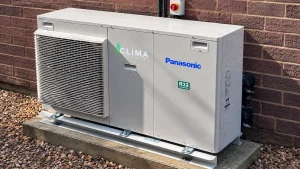
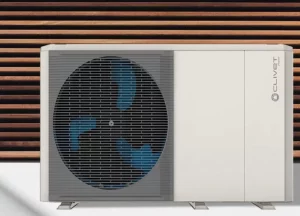
The systems also offer space efficiency advantages over many traditional heating setups. With no need for fuel storage (unlike oil or LPG systems) and typically no requirement for a dedicated plant room, ASHPs free up valuable indoor space. The outdoor unit requires only a small footprint, usually less than one square metre, and can be positioned discreetly against an external wall.
For new builds or major renovations, ASHPs integrate seamlessly with underfloor heating systems, eliminating the need for radiators altogether and further enhancing living space. Even in retrofit scenarios, modern ASHPs can work effectively with existing radiator systems, though some upsizing may be beneficial for optimal performance.
Smart Home Integration: Enhanced Control and Efficiency
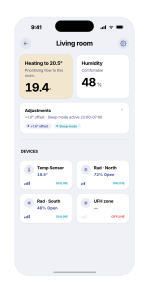
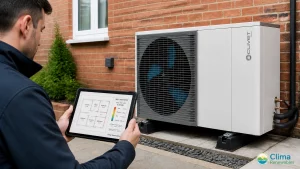
The latest ASHP models offer sophisticated smart controls that seamlessly integrate with home automation systems. These intelligent interfaces allow precise temperature management, zone control, and remote operation via smartphone apps—enhancing both comfort and efficiency.
Advanced systems can learn your household’s patterns, optimising performance by anticipating heating needs based on occupancy and weather forecasts. Some models connect to internet weather services to adjust operation proactively, increasing efficiency as outdoor temperatures fluctuate.
This intelligent control far surpasses the capabilities of traditional heating systems, allowing for:
- Room-by-room temperature control
- Vacation mode settings
- Energy usage monitoring in real-time
- Automatic maintenance alerts
- Voice control through digital assistants
For tech-savvy homeowners, these features offer unprecedented convenience while further improving energy efficiency through optimised operation.
Suitability for Different Property Types: Versatile Solutions
Contrary to some misconceptions, ASHPs can successfully heat a wide range of property types. While they perform optimally in well-insulated homes, advances in technology have expanded their suitability:
New-Build Properties
In modern, well-insulated new builds, ASHPs excel, often paired with underfloor heating for ultimate efficiency. The low-temperature heat distribution perfectly complements the steady, consistent warmth these systems provide.
Period Properties
Even in older buildings, ASHPs can perform effectively with appropriate complementary measures. Combining an ASHP installation with targeted insulation improvements—such as loft insulation, draught-proofing, and possibly larger radiators—can transform heating performance in Victorian or Edwardian properties.
Flats and Apartments
Innovative mini-split ASHP systems with compact outdoor units make this technology accessible even for flats and apartments where space is limited. Some manufacturers now offer units specifically designed for balcony installation or community heating solutions for entire blocks.
Rural Properties
For rural homes off the gas grid, ASHPs offer particularly compelling advantages over oil, LPG, or direct electric heating, combining environmental benefits with substantial cost savings and eliminating dependency on fuel deliveries.
Health and Wellbeing Benefits: A Healthier Home Environment
The consistent, gentle heating provided by ASHPs creates a more comfortable living environment than the fluctuating temperatures common with traditional systems. Rather than the rapid heating and cooling cycles of conventional boilers, ASHPs maintain steady temperatures that many find more comfortable and conducive to wellbeing.
This consistent warmth helps prevent damp and mould issues that plague many British homes, particularly older properties. By maintaining minimum temperature levels throughout the property, ASHPs reduce condensation risks and associated respiratory problems.
The elimination of combustion from the heating process also removes potential sources of carbon monoxide—a silent killer that causes dozens of deaths annually in the UK. Without flames, flues, or exhaust gases, ASHPs provide peace of mind regarding this serious safety concern.
Conclusion: A Heating Revolution for Modern Homes
The benefits of installing an ASHP extend far beyond simple heating. From substantial energy and cost savings to environmental advantages, property value enhancement, and improved living comfort, these systems represent the future of home climate control.
As technology continues to advance and installation expertise grows, ASHPs are becoming increasingly accessible to British homeowners across all property types and budgets. The combination of government incentives, long-term savings, and environmental benefits makes now an ideal time to consider this transformative technology for your home.
While the initial investment may be higher than replacing a conventional boiler, the lifetime value proposition is compelling. An ASHP isn’t merely a heating system; it’s an investment in your property’s future, your household finances, and our shared environment.
For homeowners looking to reduce their environmental impact without compromising on comfort or convenience, few technologies offer such a comprehensive package of benefits. As Britain moves towards a net-zero future, ASHPs stand at the forefront of domestic heating solutions—efficient, reliable, and future-proof.