As energy bills continue to soar and environmental concerns grow, more British homeowners are exploring alternative heating solutions. An increasingly popular option is the air source heat pump—a technology that promises both efficiency and sustainability. But what exactly is this marvel of modern engineering, and how does it function? This comprehensive guide will walk you through everything you need to know about air source heat pumps in simple, straightforward terms.
Introduction: The Heating Revolution in British Homes
Gone are the days when gas boilers reigned supreme in British households. With the government’s ambitious net-zero targets looming and gas prices reaching unprecedented heights, the humble air source heat pump has stepped into the spotlight.
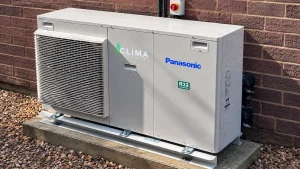
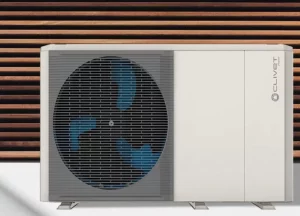
You’ve likely spotted these units outside homes across the country—rectangular boxes whirring away, quietly transforming the ambient air into cosy warmth for the property within. Their growing popularity isn’t merely a passing trend; rather, it represents a fundamental shift in how we think about heating our homes.
What is an Air Source Heat Pump?
Simply put, an air source heat pump is a device that extracts heat from the outside air and transfers it inside your home. Surprisingly, these clever systems can extract heat even when outdoor temperatures plummet to as low as -15°C!
Unlike traditional heating systems that generate heat by burning fuel or using electrical resistance, air source heat pumps move existing heat from one place to another. This fundamental difference makes them remarkably efficient—for every unit of electricity consumed, they typically produce three to four units of heat energy.
The technology might sound cutting-edge, but it’s actually based on principles we encounter daily. Your refrigerator operates on similar mechanics, albeit in reverse; whilst your fridge removes heat from inside and expels it outside, an air source heat pump captures heat from outside and brings it in.
How Does an Air Source Heat Pump Work?
The magic of an air source heat pump lies in its ability to harness a basic law of physics: heat naturally flows from warmer areas to cooler ones. The system cleverly manipulates this principle through a refrigeration cycle with four main components:
- The Evaporator: Located in the outdoor unit, this component contains refrigerant fluid that absorbs heat from the surrounding air. As the fluid absorbs heat, it changes from a liquid to a gas.
- The Compressor: Once the refrigerant has absorbed heat and transformed into a gas, it enters the compressor. Here, it’s compressed, which significantly increases both its temperature and pressure.
- The Condenser: The hot, compressed gas then moves to the condenser inside your home. As it condenses back into a liquid, it releases the heat it captured earlier. This released heat warms your home’s air or water.
- The Expansion Valve: Finally, the refrigerant passes through an expansion valve, which reduces its pressure. This cooling effect prepares it to begin the cycle anew.
Whilst this might sound rather technical, think of it as a continuous cycle of capturing, concentrating, and releasing heat—rather like a sponge that soaks up warmth from the air outside and then squeezes it out inside your home.
Types of Air Source Heat Pumps
Not all air source heat pumps are created equal. The two main varieties serve different purposes:
Air-to-Water Heat Pumps
These systems distribute heat via your wet central heating system. The captured heat warms water, which then circulates through your radiators, underfloor heating, or provides hot water for your taps and showers.
Air-to-water systems are particularly popular in the UK because they can replace conventional boilers and work with existing radiator setups, though radiators may need to be upgraded to larger sizes as heat pumps operate at lower temperatures than traditional boilers.
Air-to-Air Heat Pumps
Instead of heating water, these systems warm air directly. The heated air is then circulated throughout your home using fans. Whilst effective for space heating, these systems cannot provide hot water for your taps or shower.
Many air-to-air systems offer the added bonus of functioning as air conditioners during warmer months—a feature that’s becoming increasingly desirable as British summers grow hotter.
Benefits of Air Source Heat Pumps
The rising popularity of air source heat pumps stems from their numerous advantages:
Energy Efficiency
Perhaps the most compelling benefit is their remarkable efficiency. A well-installed air source heat pump typically delivers three to four units of heat for every unit of electricity it consumes. This 300-400% efficiency (often expressed as a Coefficient of Performance or COP of 3-4) far outstrips traditional heating systems.
During a particularly mild day, when the outdoor temperature hovers around 10°C, this efficiency can climb even higher—some modern systems achieving a COP of 5 or greater.
Reduced Carbon Footprint
As the UK electricity grid continues its green transition, incorporating more renewable sources, heat pumps become increasingly eco-friendly. Unlike gas or oil boilers, they produce no direct carbon emissions during operation.
A typical air source heat pump can reduce a household’s carbon emissions by approximately 2.5 tonnes annually when replacing a gas boiler, and substantially more when replacing oil, LPG, or direct electric heating.
Lower Running Costs
Although electricity costs more per unit than gas in the UK, the superior efficiency of heat pumps often translates to lower overall running costs. This advantage becomes more pronounced as gas prices rise and electricity generation becomes greener and potentially cheaper.
The exact savings vary depending on your existing heating system, home insulation, and electricity tariff, but many households report noticeable reductions in their energy bills after switching.
Longevity and Maintenance
Whilst a typical gas boiler might serve you faithfully for 10-15 years, air source heat pumps boast an impressive lifespan of 20-25 years. Furthermore, they require less maintenance than combustion-based systems—an annual check is generally sufficient to keep everything running smoothly.
Government Incentives
The UK government has introduced various schemes to encourage heat pump adoption. Currently, the Boiler Upgrade Scheme offers grants towards installation costs, making the initial investment more manageable.
Installation Considerations
Installing an air source heat pump requires careful planning:
Space Requirements
The outdoor unit needs sufficient space for proper airflow. Ideally, you’ll need at least one metre of clear space in front of the unit and reasonable clearances on all sides.
The units also need to be placed on a sturdy base—typically a concrete pad or wall brackets—and positioned to minimise noise disturbance to both you and your neighbours.
Home Suitability Assessment
Not every property is immediately suitable for heat pump installation. Factors such as insulation levels, radiator sizes, and current heating controls all influence system performance.
A thorough assessment by a qualified installer will determine whether your home needs additional improvements before installation. Common recommendations include enhanced loft insulation, draught-proofing, or upgrading to larger radiators or underfloor heating.
MCS Certification
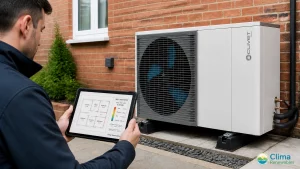
Always choose an installer with Microgeneration Certification Scheme (MCS) accreditation. This ensures they meet recognised industry standards and that your installation qualifies for government incentives.
Running Costs and Efficiency
Understanding the economics of running an air source heat pump helps set realistic expectations:
Factors Affecting Performance
Several elements influence how efficiently your heat pump operates:
- Outdoor temperature: Performance naturally decreases in colder weather, though modern systems remain effective even in sub-zero conditions.
- Flow temperature: Lower flow temperatures (the temperature of water circulating through your radiators) improve efficiency but require adequately sized heat emitters.
- Insulation levels: Better insulated homes retain heat longer, reducing the system’s workload.
- User behaviour: Understanding how to operate your system optimally makes a significant difference.
Smart Controls
Modern heat pumps feature sophisticated controls that adapt to weather conditions and learn your household patterns. These intelligent systems can significantly enhance efficiency by anticipating heating needs and making minute adjustments to optimise performance.
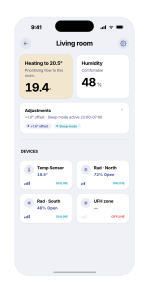
Some advanced models now offer smartphone connectivity, allowing you to monitor and adjust settings remotely—perfect for those unpredictable British weather days when you’re caught without a brolly and wanting to arrive home to perfect warmth.
Common Misconceptions
Let’s address some prevalent myths about air source heat pumps:
“They Don’t Work in Cold Weather”
Whilst efficiency does decrease as temperatures drop, modern air source heat pumps remain effective even in freezing conditions. Today’s advanced models can extract useful heat from air as cold as -25°C, though they’ll work harder to do so.
The British climate, with its relatively mild winters compared to Scandinavian countries (where heat pumps are ubiquitous), actually presents near-ideal conditions for heat pump operation.
“They’re Too Noisy”
Early heat pump models did indeed produce noticeable noise, but technological advances have dramatically reduced sound levels. Modern units typically operate at around 40-60 decibels—comparable to a refrigerator or moderate rainfall.
Proper installation, including anti-vibration mounts and thoughtful positioning, can further minimise any noise impact.
“They Can’t Produce Water Hot Enough”
While heat pumps traditionally operate at lower temperatures than boilers (typically 35-55°C compared to 70-80°C for boilers), advances in technology have expanded their capabilities. Many modern systems can now produce water at 65°C or higher when required.
For most homes, the lower flow temperatures are actually beneficial, providing more consistent, comfortable heating than the sharp on-off cycles of traditional systems.
Are Air Source Heat Pumps Right for You?
Determining whether an air source heat pump suits your circumstances involves considering several factors:
Ideal Candidates
Air source heat pumps typically work best for:
- Well-insulated properties
- Homes with space for the outdoor unit
- Properties off the gas grid (where alternatives like oil or electric heating are costly)
- Environmentally conscious homeowners seeking to reduce their carbon footprint
- Those planning to stay in their property long-term to realise the return on investment
Less Suitable Scenarios
You might want to reconsider or make additional improvements if:
- Your home has poor insulation (address this first)
- You have insufficient outdoor space
- You’re unable to make necessary complementary upgrades like larger radiators
- You’re planning to move home in the very near future
Conclusion: The Future of Home Heating
As Britain marches towards its net-zero ambitions, air source heat pumps represent not merely an alternative but increasingly the future standard for home heating. Their combination of efficiency, sustainability, and technological sophistication positions them as a cornerstone of the green heating revolution.
The transition may seem daunting, but with proper assessment, professional installation, and understanding of how to optimise your system, an air source heat pump can transform how you heat your home—keeping you cosy whilst shrinking both your energy bills and environmental impact.
Whether you’re building a new property, replacing an ageing boiler, or simply exploring greener alternatives, air source heat pumps deserve serious consideration. With government support, technological improvements, and growing installer expertise, there’s never been a better time to explore this heating solution.
Remember, the journey towards sustainable heating isn’t just about following trends; it’s about making informed choices that benefit both your household and the planet for decades to come.