Upgrading your home’s heating shouldn’t mean turning your living room into a construction site. This guide reveals how modern technology allows you to swap a gas, oil, or LPG boiler for a heat pump while keeping your existing radiators and pipework, all while securing a government grant of £7,500 for gas homes or £9,000 for homes replacing oil or LPG.
For years, the biggest barrier to adopting renewable heating has been a single, daunting myth: that installing a heat pump requires ripping up every floorboard and replacing every radiator in the house. For homeowners in Northamptonshire, Cambridgeshire, and Bedfordshire, this “disruption dread” has kept many tied to expensive, carbon-heavy oil and gas boilers.
But the industry has changed. Through a combination of advanced system design, smart predictive controls, and intelligent flow management, it is now possible to achieve a “zero-disruption” retrofit. You can enjoy the efficiency of a heat pump installation without the mess, the cost of new plumbing, or the weeks of upheaval.
The “Pipework Myth” Put to Rest
The most common concern we hear during our surveys is: “Are my pipes too small for a heat pump?”
In the past, because heat pumps ran at lower temperatures than boilers, they required a much higher flow of water to deliver the same amount of heat. This often meant existing 15mm or microbore pipes couldn’t cope. However, modern system architecture has solved this through Predictive Hydronic Balancing.
Instead of a “dumb” system that simply pushes hot water around, modern controls use data to learn exactly how your home loses heat. By managing the flow of water room-by-room and predicting external weather changes, these systems can move heat through your existing pipes far more effectively. By optimizing the “Delta T” (the temperature difference between the water going in and out of your radiators), we can often keep your original pipework exactly where it is.
Why You Don’t Need to Replace Your Radiators
Many homeowners are told they need “double-panel” or “oversized” radiators for a heat pump to work. While this was often assumed in the past, modern system design and intelligent flow management have changed the picture.
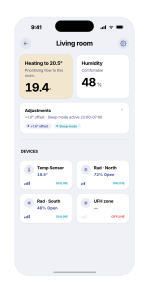
- Smart Controls and Predictive Balancing: Modern systems use controls that continuously monitor demand and balance heat delivery across the home. This helps existing radiators and pipework work more effectively by sending the right amount of heat to the right place at the right time.
- Smart Modulation: Rather than running your radiators at full blast and then turning them off, modern systems modulate. They provide a steady, consistent flow of warmth that keeps the fabric of your building at a stable temperature. This “steady-state” heating is more comfortable and far more efficient.
By keeping your existing emitters, you save thousands in hardware costs and avoid the aesthetic headache of fitting larger radiators in rooms where space is at a premium.

The Boiler Upgrade Scheme (BUS) Grant: £7,500 for Gas, £9,000 for Oil or LPG
Perhaps the best part of the “no-change” retrofit is that it doesn’t affect your eligibility for government funding. The Boiler Upgrade Scheme (BUS) provides a £7,500 grant for homes replacing gas boilers and a £9,000 grant for homes replacing oil or LPG boilers with an air source heat pump.
This grant is specifically designed to help homeowners transition away from fossil fuels like oil, LPG, and gas. For oil and LPG customers in particular, the higher £9,000 rate makes the switch even more affordable. Because the grant is paid directly to the installer and taken off your final bill, it significantly reduces the upfront investment. At Clima Renewables, we handle the entire application process for you, ensuring that your transition to sustainable heating is as financially smooth as it is technically sound.
To qualify, you simply need:
- An eligible property (most homes in England and Wales).
- A valid Energy Performance Certificate (EPC) with no outstanding recommendations for loft or cavity wall insulation (though even this has become more flexible recently).
- To be replacing an existing fossil fuel system (gas, oil, or LPG).
Survey-First: The Only Way to Guarantee Success
While the technology exists to keep your pipes and radiators, it isn’t a “one-size-fits-all” solution. You cannot simply “slap” a heat pump onto an old system and hope for the best. Success in a retrofit depends entirely on the quality of the initial assessment.
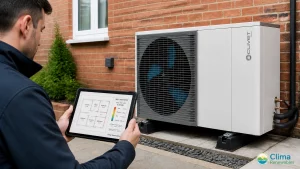
At Clima Renewables, we don’t guess; we measure. We conduct a detailed Heat Loss Survey that calculates the exact thermal requirements of every single room in your home. We look at your wall construction, window types, and existing radiator outputs.

By using thermal imaging surveys, we can identify hidden draughts or cold spots that might affect your system’s performance. This engineering-led approach allows us to design a system that works with your home’s unique character, ensuring that “no new pipes” actually results in a warm, cozy home and low energy bills.
The “Zero Disruption” Experience: What to Expect
If you are upgrading from an old oil or LPG tank, the change can be transformative. Every property is different, so the installation process is always tailored to the home, the existing system, and the final design. A typical project might look something like this:
- Initial stage: Your existing boiler or old heating equipment is safely decommissioned at the appropriate point in the install.
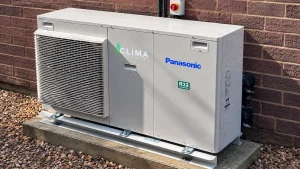
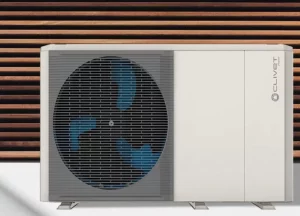
- Installation stage: The new outdoor unit and internal controls are fitted in line with the agreed system design for your property.
- Final stage: The system is commissioned, tested, and balanced using smart software so it runs as efficiently and comfortably as possible.
Because we aren’t usually lifting floors or chasing pipes into walls, the mess is often minimal. The exact sequence and timescale will vary from one home to another, but the goal is always the same: a smoother upgrade with less disruption and a heating system designed properly for your property.

Frequently Asked Questions
Will my house actually be warm enough with old radiators?
Yes. By using smart controls, predictive hydronic balancing, and flow management, we ensure your radiators receive the exact amount of energy needed to maintain your target temperature. If our heat loss survey identifies a single room that might struggle, we will tell you upfront, but in the vast majority of retrofits, no changes are needed.
Is the system noisy?
Not at all. Modern units are designed to be ultra-quiet, often operating at decibel levels lower than a kitchen fridge. Additionally, because the system balances water flow intelligently, you won’t get the “clanging” or “whistling” often associated with old boiler systems.
Can I get the grant if I currently use oil or LPG?
Absolutely. Homes replacing oil or LPG boilers now qualify for the higher £9,000 BUS grant, while homes replacing gas boilers can get £7,500. In fact, oil and LPG users often see the biggest savings when switching to a heat pump, as they move away from volatile fuel prices to a stable, efficient electric-based system.
Does this rely on high-temperature technology to work with existing radiators?
No. The approach is based on smart controls and predictive hydronic balancing, not high-temperature technology. By managing flow more accurately and designing the system around the results of a proper heat loss survey, it is often possible to keep existing radiators and pipework without compromising comfort.
Conclusion: A Future-Proof Home Without the Fuss
The era of the “messy” heat pump install is over. Homeowners in Northamptonshire, Bedfordshire, and Cambridgeshire can now choose a smarter, cleaner way to heat their homes without the disruption of a full replumb.
By leveraging the BUS grant — £7,500 for gas homes and £9,000 for oil or LPG homes — and opting for a system designed around your existing infrastructure, you can slash your carbon footprint and protect yourself from rising fossil fuel costs: all while keeping your floorboards firmly in place.
The first step is always data, not guesswork.
Ready to see if your home is a candidate for a zero-disruption retrofit?
Book a heat loss survey with Clima Renewables today. Let’s look at the data and design a system that works for your home, your budget, and your lifestyle.