The transition to low-carbon heating has become a priority for homeowners across Britain. Amidst rising energy prices and growing environmental concerns, heat pumps have emerged as a leading alternative to traditional gas and oil boilers. However, when exploring this technology, you’ll quickly encounter two main options: Air Source Heat Pumps (ASHPs) and Ground Source Heat Pumps (GSHPs). While both deliver efficient, renewable heating, they differ significantly in installation requirements, cost, performance, and suitability for various property types.
This comprehensive guide unpacks the key differences between ASHP vs GSHP systems, helping you determine which technology might better suit your home, budget, and circumstances.
Understanding the Basics: How Each System Works
Before diving into detailed comparisons, it’s important to understand the fundamental principles behind each technology.
How Air Source Heat Pumps Function
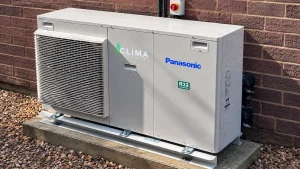
An ASHP extracts heat from the outside air, even in temperatures as low as -15°C. The system works much like a refrigerator in reverse, using a refrigerant circuit to capture ambient heat, compress it to higher temperatures, and transfer it to your home’s heating and hot water systems.
The main components include an outdoor unit (containing an evaporator coil and fan), a compressor, a heat exchanger, and an expansion valve. Together, these elements form a closed system that continuously moves heat from outside to inside.
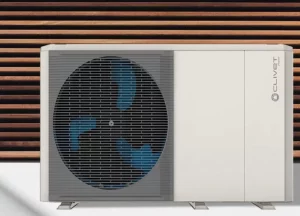
Positioned against an external wall, the outdoor unit draws in air using its fan, enabling the evaporator to extract heat energy. This process occurs regardless of outside temperature, though efficiency does decrease as the mercury drops.
How Ground Source Heat Pumps Function
Unlike ASHPs, ground source heat pumps extract heat from beneath the earth’s surface, where temperatures remain surprisingly stable (typically 10-12°C) year-round, regardless of seasonal air temperature fluctuations above.
A GSHP system comprises three key elements: a ground array (pipes buried in the garden or inserted into boreholes), a heat pump unit (typically installed indoors), and a distribution system. A water-antifreeze mix circulates through the underground pipes, absorbing ground heat before returning to the heat pump, where the captured thermal energy is concentrated to useful temperatures for home heating.
The consistency of underground temperatures gives GSHPs a performance advantage during extremely cold weather, when air source efficiency might decline.
Installation: Complexity, Disruption and Requirements
The installation process represents perhaps the most significant difference between ASHP vs GSHP systems.
ASHP Installation
Air source heat pump installation typically involves:
- A survey and heat loss calculation to determine appropriate system sizing
- Mounting the outdoor unit on a suitable external wall or ground-level platform
- Installing or upgrading internal components (hot water cylinder, potential radiator changes)
- Connecting and commissioning the system
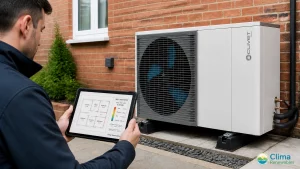
For most properties, ASHP installation takes 2-3 days with minimal disruption. No substantial groundworks are required, making the process relatively straightforward for most homes. The main requirement is approximately 1m² of space for the outdoor unit, which needs good airflow and consideration for noise impact on neighbours.
GSHP Installation
Ground source installation is considerably more involved:
- Initial ground assessment and thermal conductivity testing
- Extensive groundworks for horizontal loops or specialist drilling for vertical boreholes
- Internal heat pump and system installation
- Connection and commissioning
The process typically takes 1-2 weeks, with the ground array installation causing significant temporary disruption to gardens or driveways. Horizontal ground loops require substantial land area—typically 2-3 times the floor area being heated—while vertical boreholes need less surface space but involve specialised (and costly) drilling equipment.
Space Requirements Comparison
The space requirements differ dramatically:
- ASHP: Requires only about 1m² for the outdoor unit, which can be wall-mounted or positioned on the ground near the building.
- GSHP: Horizontal systems need extensive garden space—a typical three-bedroom home might require 300-500m² of land for ground loops. Vertical systems require less surface area but still need access for drilling machinery during installation.
This space factor often becomes decisive for many UK properties, particularly in urban areas where garden space is limited.
Performance and Efficiency: ASHP vs GSHP
Performance comparison requires looking at several metrics:
Coefficient of Performance (COP)
The COP measures how many units of heat energy a system produces for each unit of electricity consumed:
- ASHP: Typically achieves COPs of 2.5-4.0, depending on outside temperature
- GSHP: Generally delivers COPs of 3.5-5.0, with more consistent performance year-round
This efficiency difference occurs because ground temperatures remain stable, whilst air temperatures fluctuate seasonally. During very cold weather, when heating demand peaks, ASHPs must work harder to extract heat from colder air, temporarily reducing their efficiency.
Seasonal Performance Factor (SPF)
The SPF provides a more realistic annual efficiency measure:
- ASHP: Usually achieves SPFs of 2.5-3.5 in UK conditions
- GSHP: Typically delivers SPFs of 3.0-4.5
This translates to ground source systems potentially using 15-30% less electricity annually for the same heating output.
Temperature Output
The maximum temperature each system can produce affects compatibility with existing radiators:
- ASHP: Standard models typically produce maximum temperatures of 55°C, though some newer models can reach 65°C
- GSHP: Most systems operate at 35-55°C, with some advanced models capable of 65-70°C
Lower flow temperatures work ideally with underfloor heating but may require larger radiators in retrofit scenarios.
Cost Comparison: Initial Investment vs Running Expenses
The financial picture involves balancing upfront costs against long-term operational savings.
Installation Costs
The initial investment differs substantially:
- ASHP: Typically costs £8,000-£18,000 installed, depending on system size and complexity
- GSHP: Usually ranges from £15,000-£35,000, with variations based on whether horizontal loops or vertical boreholes are used
This significant cost difference reflects the extensive groundworks required for GSHP installation. Vertical borehole systems typically sit at the higher end of the price spectrum due to specialised drilling requirements.
Running Costs
Operational expenses favour ground source technology:
- ASHP: Annual running costs for a typical three-bedroom semi-detached house might range from £900-£1,300
- GSHP: The same property might incur £700-£1,000 in annual running costs
This difference stems from the higher year-round efficiency of ground source systems, though the exact figures depend on property insulation levels, heating patterns, and electricity tariffs.
Maintenance Requirements
Both systems require minimal maintenance compared to fossil fuel alternatives:
- ASHP: Annual check recommended, with 15-20 year expected lifespan for the heat pump unit
- GSHP: Annual inspection advised, with 20-25 year lifespan for the heat pump and 50-100+ years for ground arrays
The longer lifespan of ground source components contributes to better lifecycle value despite higher initial costs.
Government Incentives
Current UK government support includes:
- ASHP: £5,000 grant available through the Boiler Upgrade Scheme
- GSHP: £6,000 grant available through the same scheme
These incentives partially offset the installation cost difference, though a substantial gap remains.
Environmental Impact: Carbon Footprint Comparison
Both heat pump types deliver significant environmental benefits compared to fossil fuel heating:
Carbon Emissions
The carbon comparison depends on electricity grid intensity:
- ASHP: Typically reduces carbon emissions by 60-70% compared to gas boilers when using standard grid electricity
- GSHP: Usually achieves 65-75% carbon reduction due to higher efficiency
As the UK electricity grid continues to decarbonise, both systems become increasingly climate-friendly, with the slight advantage remaining with ground source technology due to its higher efficiency.
Refrigerant Considerations
Both systems use refrigerants, though with different risk profiles:
- ASHP: Contains refrigerant in both indoor and outdoor sections, with slightly higher risk of leakage due to external exposure
- GSHP: Refrigerant circuit typically entirely within the building, reducing leakage risk
Modern systems use refrigerants with lower global warming potential than earlier models, minimising environmental impact in the unlikely event of leakage.
Suitability for Different Property Types
Not all properties are equally suited to both technologies:
ASHP Ideal Applications
Air source heat pumps typically work best for:
- Urban properties with limited outdoor space
- New-build homes with good insulation
- Properties needing simpler, less disruptive installation
- Homes where minimising upfront cost is priority
- Retrofits where garden preservation is important
- Listed buildings where groundworks might be problematic
GSHP Ideal Applications
Ground source systems often suit:
- Rural properties with substantial land available
- Properties with higher heating demands
- Homes where garden disruption during installation is acceptable
- Self-builds or major renovations where groundworks can be incorporated into broader project
- Owners planning very long-term occupancy who can realise the full lifecycle benefits
- Locations where ambient noise could be problematic
Noise Levels: Acoustic Considerations
Sound output represents another notable difference:
- ASHP: Produces some noise from the fan and compressor, typically 40-60 decibels at one metre (comparable to a modern refrigerator or moderate rainfall). Noise has implications for positioning near boundaries and neighbours.
- GSHP: Operates almost silently as all moving components are housed indoors, with ground arrays producing no noise whatsoever.
For terraced homes or properties with close neighbours, the near-silent operation of ground source technology may be advantageous, though modern air source units have become increasingly quiet.
Planning Permission and Regulations
Regulatory requirements vary between systems:
ASHP Planning Considerations
Most domestic ASHPs fall within permitted development rights, meaning no planning permission is required, provided:
- The installation complies with MCS planning standards
- The unit is at least one metre from property boundaries
- The installation is not on a wall fronting a highway in Conservation Areas or World Heritage Sites
- The external unit’s volume is less than 0.6m³ (on a flat roof) or 0.3m³ (on any other building part)
GSHP Planning Considerations
Ground source installations typically face fewer planning restrictions:
- Most domestic GSHPs are permitted developments with no planning permission required
- Vertical boreholes may require notification to the Environment Agency in certain areas
- Listed buildings or properties in Conservation Areas may have special requirements
The lower visual impact of ground source systems—with most components hidden underground or indoors—often makes them easier to approve in sensitive locations.
Practical Considerations: What Life is Like with Each System
Day-to-day operation reveals additional differences worth considering:
Heating Experience
Both systems deliver comfortable heating but with subtle differences:
- ASHP: May require slightly more careful control during extreme cold snaps
- GSHP: Typically provides more consistent performance regardless of weather conditions
Most modern heat pumps of either type include weather compensation controls that automatically adjust operation based on outside temperatures.
System Control and Monitoring
Contemporary heat pumps offer sophisticated control options:
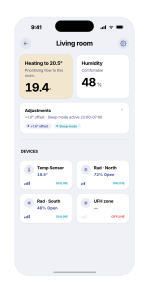
- ASHP: Many units now include smart controls, remote management via apps, and integration with home automation systems
- GSHP: Similar control capabilities, with some systems offering ground temperature monitoring for optimised performance
The user experience is increasingly similar between both technologies as smart control systems become standard.
Impact on Garden and Outdoor Space
Long-term implications for your property differ significantly:
- ASHP: Permanent external unit requires consideration for visual impact and access for maintenance
- GSHP: After installation, ground arrays have no visible presence, allowing complete garden restoration, though access to header pipes must be maintained
For homeowners who value their garden aesthetics, the invisible nature of ground source infrastructure following installation may be appealing despite the initial disruption.
Making Your Decision: ASHP vs GSHP Checklist
When deciding between ASHP vs GSHP, consider these key questions:
Space Assessment
- Do you have sufficient outside wall space for an ASHP unit?
- Does your property have adequate land for ground loops (300-500m² for a typical home) or access for borehole drilling?
- Are there any protected trees, archaeological considerations, or utilities that might complicate groundworks?
Budget Evaluation
- What is your available budget for initial installation?
- How long do you intend to remain in the property to recoup investment?
- Are long-term running costs or initial investment your primary financial concern?
Property Suitability
- How well insulated is your home?
- What type of heat distribution system do you have or plan to install?
- Is your property in a conservation area or subject to planning restrictions?
Environmental Priorities
- How important is maximising carbon reduction in your decision?
- Do you have or plan to install solar PV or other renewable technologies?
- Are ambient noise levels a concern for you or your neighbours?
Practical Considerations
- How tolerant are you of garden disruption during installation?
- Is visual impact of an external unit problematic for your property aesthetics?
- Do you have neighbours in close proximity who might be affected by ASHP noise?
Case Studies: Real-World Comparisons
Suburban Semi-Detached House
The Smiths own a 1970s three-bedroom semi-detached house in Berkshire. With limited garden space but good insulation following recent improvements, they opted for an ASHP. Their decision factors included:
- 85m² garden deemed insufficient for horizontal ground loops
- £11,000 installation cost after government grant
- Simple two-day installation process
- Annual running costs approximately £1,100, representing a modest saving over their previous gas boiler
One year after installation, they report satisfaction with the system’s performance and minimal noise impact, though they needed to install some additional radiators to compensate for lower flow temperatures.
Rural Detached Property
The Patels own a four-bedroom detached house in rural Gloucestershire, previously heated by oil. They chose a GSHP with horizontal ground loops after considering:
- 1,200m² garden providing ample space for ground arrays
- Higher initial cost (£24,000 after grant) offset by substantial running cost savings
- Complete elimination of oil deliveries and storage
- Annual operating expenses of £850, representing a 60% reduction from their previous system
Despite significant garden disruption during the week-long installation, they report the lawn has fully recovered and they now benefit from consistent, efficient heating regardless of weather conditions.
Conclusion: Finding Your Ideal Heat Pump Solution
When evaluating ASHP vs GSHP options, there’s no universal “better” choice—only the system that better suits your specific circumstances. Ground source heat pumps generally offer superior efficiency and performance but at considerably higher cost and with significant installation requirements. Air source systems provide a more accessible, less disruptive path to renewable heating with still-impressive efficiency.
For most urban and suburban properties with limited outdoor space, ASHPs represent the most practical heat pump solution. Their lower installation costs, simpler fitting process, and modest space requirements make them an accessible entry point to renewable heating.
Conversely, rural properties with substantial land often benefit from the higher efficiency and invisible infrastructure of ground source systems, particularly when replacing expensive fuels like oil or LPG. The higher initial investment pays dividends through greater efficiency, longer component lifespan, and near-silent operation.
Whichever technology you choose, both ASHP and GSHP systems deliver substantial environmental benefits compared to fossil fuel alternatives. As Britain’s electricity grid continues to decarbonise, these advantages will only increase, making either heat pump type an environmentally sound investment for the future.
Remember that professional assessment is essential—every property has unique characteristics that influence system selection and design. Consulting with MCS-certified installers who offer both technologies will provide property-specific guidance to inform your decision, ensuring you select the heat pump system that best balances your priorities for cost, performance, and convenience.