As Britain charges toward its ambitious net-zero targets and traditional energy prices continue their upward trajectory, heat pumps have emerged as a popular alternative to conventional heating systems. Yet for many homeowners, a crucial question remains: are they actually worth the investment? This comprehensive guide examines the financial, environmental, and practical considerations to help you determine whether a heat pump is the right choice for your British home.
Introduction: The Great British Heating Dilemma
The British relationship with home heating has always been somewhat complicated. Our variable climate, ageing housing stock, and traditional attachment to gas boilers create a unique context for any heating decision. Yet as energy security concerns mount and climate consciousness grows, more homeowners find themselves contemplating the switch to heat pump technology.
You’ve likely heard the buzz surrounding these systems—perhaps from neighbours who’ve taken the plunge, government advertising campaigns, or heated discussions about future heating regulations. But beyond the hype and policy ambitions lies a practical question: do the numbers and performance actually stack up for your particular situation?
The Financial Equation: Costs, Savings, and Payback
Any honest assessment of heat pump value must begin with a thorough examination of the finances involved.
Installation Costs
There’s no avoiding the fact that heat pumps require a significant upfront investment:
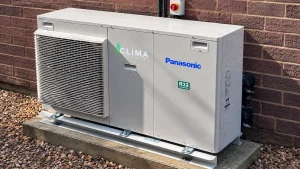
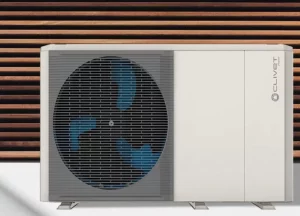
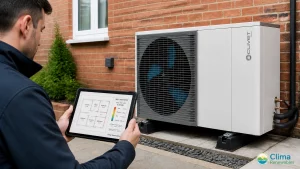
Air Source Heat Pumps typically cost between £7,000 and £13,000 fully installed, with the average installation hovering around £10,000.
Ground Source Heat Pumps demand an even greater initial outlay, generally between £14,000 and £25,000, depending on property size and ground conditions.
These figures stand in stark contrast to the £2,000-£3,000 you might expect to pay for a replacement gas boiler. However, focusing solely on this initial price disparity tells only part of the story.
Government Support
The substantial upfront costs are significantly offset by the government’s Boiler Upgrade Scheme, which currently offers:
- £7,500 towards an air source heat pump
- £7,500 towards a ground source heat pump
This grant effectively brings air source heat pump costs much closer to traditional boiler replacement—a deliberate policy decision to accelerate adoption. For many households, this support transforms the financial calculation, particularly when replacing an ageing boiler that’s approaching the end of its life.
Running Cost Comparisons
The operational economics of heat pumps versus traditional systems vary considerably depending on several factors:
Energy Efficiency of Your Home: Well-insulated properties with draught-proofing and double glazing see dramatically better heat pump performance and lower running costs.
System Efficiency: Modern heat pumps typically achieve a Coefficient of Performance (COP) between 3 and 4.5, meaning they produce 3 to 4.5 kilowatt-hours of heat for every kilowatt-hour of electricity consumed.
Energy Prices: The differential between electricity and gas prices significantly impacts potential savings. Historically, the UK’s relatively high electricity costs have limited heat pump economic advantages, but recent gas price volatility has begun shifting this balance.
Replacement System: Savings are most dramatic when replacing electric, oil, or LPG heating rather than mains gas.
For a typical semi-detached house transitioning from a reasonably efficient gas boiler, current estimates suggest annual running costs might be similar or slightly higher with a heat pump—perhaps £50-150 more annually. However, for properties off the gas grid using oil, LPG, or direct electric heating, savings often reach £500-700 per year.
The Long Game: Lifetime Value
The economics improve considerably when viewed over the system’s lifetime:
- Heat pumps typically last 20-25 years, compared to 10-15 years for gas boilers
- Maintenance costs are generally lower for heat pumps, with fewer moving parts and no annual safety certificates required
- Energy price projections suggest the electricity/gas price gap may narrow over time
- Future carbon taxes could potentially increase the cost of fossil fuel heating
When factoring in these considerations alongside the initial grant, many households find the lifetime cost of heat pump ownership competitive with or better than traditional alternatives—particularly when installation coincides with a necessary boiler replacement.
Home Suitability: The Technical Reality Check
Beyond economics, practical suitability varies significantly between properties.
Ideal Candidates
Your home likely represents a good match for heat pump technology if:
- It’s well insulated with an EPC rating of C or above
- You have sufficient outdoor space for the external unit (air source) or garden area for ground loops (ground source)
- Your property already has underfloor heating or larger radiators
- You’re planning other renovations that could incorporate necessary upgrades
Challenging Scenarios
Conversely, certain situations present greater obstacles:
- Period properties with poor insulation and restrictions on external modifications
- Homes with very limited outdoor space
- Properties with small radiators and no space to upgrade them
- Listed buildings with restrictions on alterations
That said, even challenging properties can often become suitable with appropriate improvements. The key question becomes whether the additional investment in these upgrades makes financial sense in your specific circumstances.
The Environmental Calculation
For many homeowners, environmental considerations influence the decision as much as financial factors.
Carbon Footprint Reduction
The environmental case for heat pumps strengthens as the UK electricity grid continues its remarkable decarbonisation journey:
- A typical heat pump installation reduces household carbon emissions by approximately 2.5 tonnes annually compared to a gas boiler
- This saving increases to 4-6 tonnes when replacing oil or LPG systems
- As the grid incorporates more renewable energy, these carbon savings automatically increase without requiring any changes to your heating system
For environmentally conscious homeowners, this substantial and growing carbon reduction represents a compelling reason to make the switch, even when the financial case might be marginal.
Real-World Performance: The British Experience
Much debate surrounds how heat pumps perform in actual British homes. The evidence from tens of thousands of UK installations presents a nuanced picture:
Performance in British Weather
Contrary to persistent myths, our climate is actually well-suited to heat pump technology. The mild winters experienced across much of the UK (with average winter temperatures between 3-7°C) align perfectly with optimal heat pump operating conditions.
Even during cold snaps, modern systems maintain efficiency down to -15°C and beyond—temperatures rarely seen in most parts of Britain. Indeed, Scandinavian countries with far harsher winters than ours have achieved the highest heat pump adoption rates globally.
User Satisfaction
Survey data from existing UK heat pump owners reveals generally high satisfaction levels:
- 75-80% report being satisfied or very satisfied with their systems
- 85% would recommend heat pumps to friends and family
- Most users appreciate the consistent background warmth compared to the on-off cycling of traditional boilers
The most common complaints typically relate to installation quality rather than the technology itself—highlighting the critical importance of choosing experienced, MCS-certified installers.
Looking Ahead: Future-Proofing Your Home
Any heating decision should consider the likely direction of energy policy and market trends.
Policy Direction
The government’s trajectory is clear:
- New gas boiler installations may face restrictions from 2035
- Building regulations increasingly favour low-carbon heating
- Energy efficiency standards for rental properties continue to tighten
- Future carbon taxes could potentially increase fossil fuel heating costs
Installing a heat pump today effectively future-proofs your property against these regulatory shifts.
Property Value Considerations
Early evidence suggests heat pumps may positively impact property values:
- Improved EPC ratings associated with heat pump installations typically increase property valuations
- Growing buyer awareness of energy costs makes efficient heating systems increasingly attractive
- Some mortgage lenders now offer preferential rates for energy-efficient properties
While it’s premature to claim definitive property value increases, the direction of travel appears positive as energy efficiency climbs the list of buyer priorities.
Making Your Decision: A Balanced Approach
Given these varied considerations, how should you determine whether a heat pump represents good value for your specific circumstances?
Ideal Scenarios
Heat pumps offer particularly compelling value when:
- You’re off the gas grid using oil, LPG, or direct electric heating
- Your existing boiler needs replacement anyway
- You’re renovating and can incorporate necessary upgrades
- You have a reasonably well-insulated property
- Environmental benefits are a priority for your household
- You qualify for the full government grant
Economic Evaluation Framework
Consider applying this simple framework:
- Calculate total installation costs after available grants
- Compare estimated annual running costs with your current system
- Factor in avoided replacement costs (one gas boiler replacement in 10-15 years)
- Consider potential property value impacts
- Add a value for carbon reduction if environmental factors motivate you
Beyond Pure Economics
Remember that value extends beyond strict financial calculations. Many heat pump owners report additional benefits:
- More consistent home temperatures
- Elimination of cold spots
- Improved air quality without combustion in the home
- The satisfaction of significantly reduced carbon footprint
- Potential summer cooling with reversible models
Conclusion: A Personal Calculation
The question “Is a heat pump worth it?” ultimately lacks a universal answer. The calculation varies dramatically between a well-insulated modern home currently using oil heating (where the case is overwhelmingly positive) and a draughty Victorian terrace on mains gas (where significant improvements might be needed first).
What’s clear is that for an increasing number of British homes, heat pumps represent not just an environmentally responsible choice but an economically sensible one too—particularly with current government support levels making the initial investment more accessible than ever before.
As energy costs continue their upward trend and the imperative to decarbonise our homes grows stronger, the value proposition of heat pumps will likely strengthen further. For many homeowners, the question may soon shift from “Is it worth it?” to “Can I afford not to?”
Whether you’re ready to take the plunge or simply exploring options, considering a heat pump installation represents a forward-thinking approach to home heating—one that balances immediate practicalities with long-term sustainability in true British pragmatic fashion.
Remember, the most valuable first step is obtaining detailed assessments and quotes specific to your property. With precise information tailored to your circumstances, you’ll be well-equipped to make a heating decision that serves both your household and the planet for decades to come.